

Jews in Belgrade
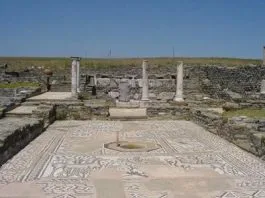
Written documents about the settlement of Jews in Belgrade date back to the 16th century when the city was under Turkish (Ottoman) rule. Many researchers, however, believe that Jews lived in Belgrade much earlier. There is evidence of the presence of Jews on the Balkan Peninsula as far back as Roman times. It is quite possible, and to be expected, that Jews, as citizens of the Roman Empire, came to the Roman military fort Singidunum, where Belgrade is located today. Today, many Jewish Sephardic surnames have distinctly Hebrew origins (such as Levi, Gadol, Katan, etc.), which also indicates the presence of Jews on the Balkan Peninsula even before the arrival of the Sephardim.
There are also Jewish records about the early presence of Jews in Belgrade – for example, in 950, Rabbi Hisdai Ibn Shaprut writes a letter on behalf of Caliph Abdul Rahman III from Cordoba and sends it to the Khazar Hagan Joseph XI through Jewish channels that also go through Belgrade. In 1205, Hungarian King Andrew II, known as a great spendthrift, takes a highly hostile stance towards Jewish merchants, including those in Belgrade.
Sephardic Jews were expelled from Spain in 1492, and shortly thereafter began to settle in Mediterranean countries and the Ottoman Empire. The first Sephardic Jews arrived in Belgrade in the 16th century. They settled on the banks of the Danube, in close proximity to the Belgrade fortress, in the lower part of Dorćol (the name Dorćol comes from the Turkish word for crossroads, literally “four ways”), which was known as Jalija. In old maps of Belgrade from the 18th century, Jewish Street is marked in the same place where it is today. Ashkenazi Jews, who mainly lived in Central European countries and were influenced by German culture and language, also settled in smaller numbers in Belgrade, but mainly in the part along the Sava River. At that time, the two Jewish communities lived separately from each other.
By the mid-18th century, Jews in Serbia were generally treated well, and were mainly engaged in salt trade. At the time of the collapse and cessation of Turkish rule in these regions, Jewish merchants were heavily involved and responsible for trade between the northern and southern parts of the Ottoman Empire.
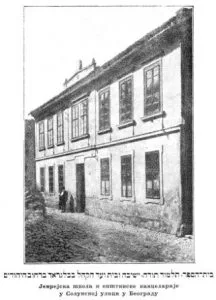
Based on historical records, the Jewish community had already reached its cultural peak in the 17th century, when there was a yeshiva – a Jewish religious school – operating in Belgrade. Belgrade rabbis and teachers printed their books in Venice, Krakow, Istanbul, and Budapest. The old synagogue near Jewish Street, built in the 17th century, has been renovated and reconstructed several times, as has the existing ritual bath (mikveh). Jews lived in that part of the city, often referred to as Ćifut mahala (in Turkish: “Jewish quarter”).
In 1804, Serbs raised an uprising against the Turks (the First Serbian Uprising) and began the struggle for independence. To avoid the war events, many Jews crossed to the other side of the Danube to Zemun in Austria-Hungary and joined the existing Jewish community there. In support of the struggle for independence, Jews supplied Serbian insurgents with weapons, which led to brutal reprisals and attacks by the Turks. The Second Serbian Uprising, which broke out after the collapse of the First Serbian Uprising, and the struggle for independence continued until 1830 when Serbs gained the right to autonomy, and later full independence.
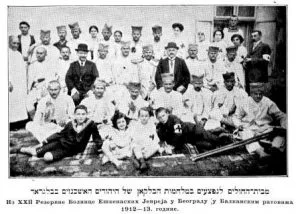
Upon gaining full rights, wealthier Jews began to gradually assimilate into Serbian civil society. The spoken language became Serbian, Jewish children began to attend state schools and universities, becoming doctors, civil servants, etc. They slowly moved to other parts of the city. However, most Jews continued to live in lower Dorćol (Jalija) until the beginning of World War I, when this part of the city was partially destroyed by Austrian artillery from across the river (at that time, Belgrade bordered the Austro-Hungarian monarchy on the other bank of the Sava and Danube rivers).
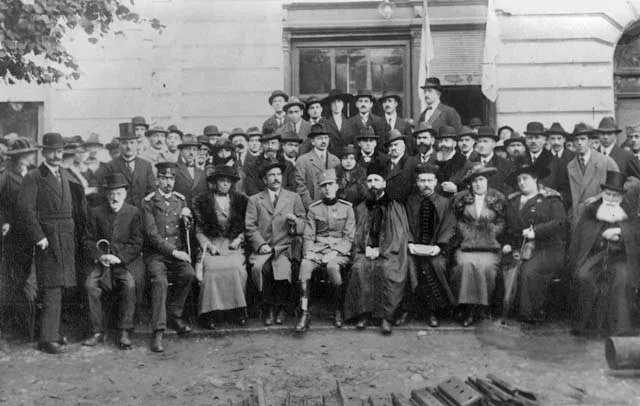
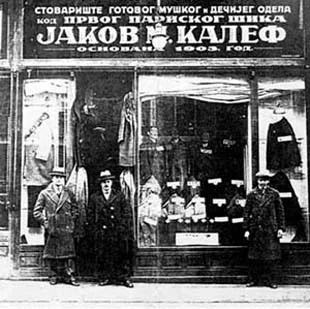
After World War I, when Belgrade became the capital of the Kingdom of Yugoslavia, the younger generation increasingly left the former Jewish quarter and began to engage in various professions, banking, stock trading, and the textile industry. The Jewish library and Jewish reading room were opened, which began to attract Jewish and non-Jewish intellectuals to study and discuss various social and cultural topics.
Just before World War II, about 12,000 Jews lived in Belgrade. Of that number, 80% were Sephardim, many of whom still spoke Judeo-Spanish (Ladino), and 20% were Ashkenazi who spoke Yiddish, a mix of German and Hebrew. Each of these groups was organized as a separate community with its own administration, school, cemetery, and other religious, humanitarian, cultural, and national organizations.
The existing harmony was brutally interrupted in 1941. Just before the outbreak of war, the pro-Nazi Yugoslav government introduced several anti-Semitic laws (such as “clausus census” in higher education and public service, prohibition of work in food production and trade, Jews were declared nationally unreliable citizens, reassigned from “elite” military units, etc.). The country was at war, and a four-year Nazi occupation began.
The Jewish community of Belgrade was almost completely destroyed in the Holocaust. The Jewish quarter in Dorćol and synagogues were largely damaged even during the bombing of Belgrade on April 6, 1941. Of the pre-war community of over 12,000 Jews, only 1,115 Belgrade Jews survived the Holocaust. Almost 95% of the Jewish population of Serbia was completely destroyed during World War II.
The work of the Jewish Community of Belgrade was renewed on October 22, 1944, a few days after the liberation of the city. A temporary administration was formed, led by writer Jacques Konfin. The former Ashkenazi synagogue on Kosmajska Street was partially repaired and returned to service. The interior of the synagogue was partitioned during the occupation and used as a “brothel,” and it was also partially damaged. On Saturday, December 2, 1944, the temple was solemnly consecrated by Rabbi Albert Altarac. The new Yugoslav leadership and legislation abolished all anti-Semitic laws and guaranteed full national, ethnic, racial, and religious equality and freedom for all citizens, including Jews. Finally, the Jewish community experienced full emancipation and was completely and equally included in all aspects of social life.
The political and social environment was completely changed, and a new system of values replaced the old one. The country was devastated, and the traditional Jewish way of life practically disappeared. While most Jews welcomed the changes, some remained skeptical, and some still carried too many bad memories of the previous period. Of the estimated 14,500 Yugoslav Jews who survived the Holocaust, one-third did not continue to live in the country (most did not even return from exile), having moved to Western Europe, North and South America. After the establishment of the state of Israel, another third went there (mostly with the first and second aliyah). The remaining third continued to pass on the Jewish heritage to younger generations.
In the 1990s, Yugoslavia broke up into a number of independent states. The Jewish communities of the former Yugoslavia, which shared so much in common, continued to cooperate despite all the turbulent events.
Today, Belgrade has a small but very active Jewish community. The only active synagogue in Serbia is in Belgrade.
The city of Belgrade has several commemorative monuments dedicated to the suffering of Jews in the last war.
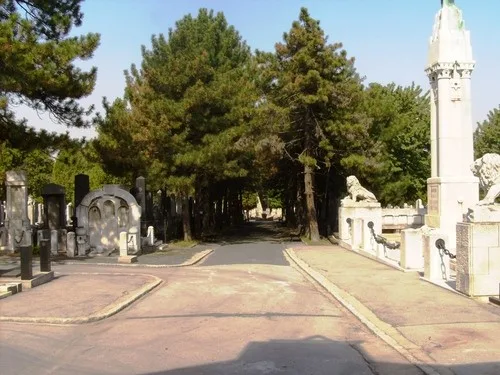
In Belgrade, there are Sephardic and Ashkenazi Jewish cemeteries, but only the Sephardic cemetery is in active use for the entire community.