


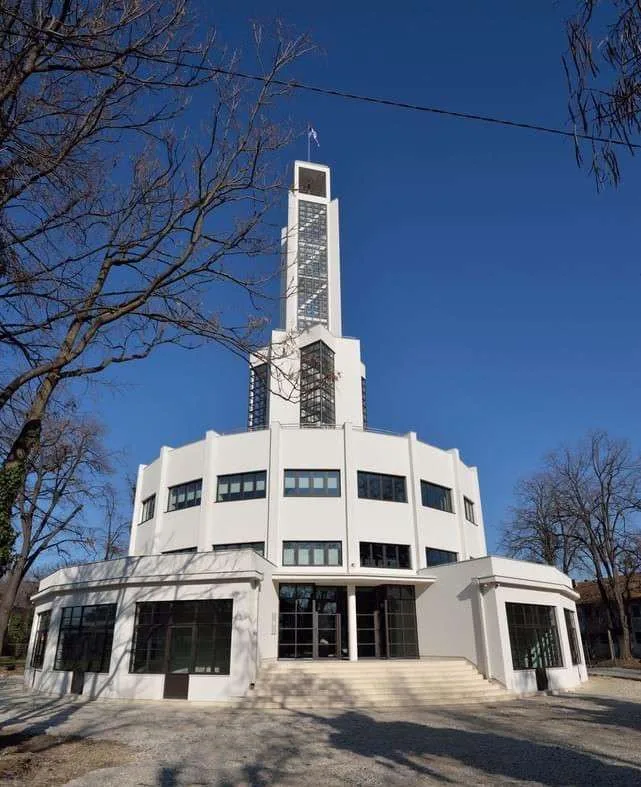
The ceremonial academy marking the Day of Remembrance for Holocaust Victims in Belgrade will be held on Thursday, May 8, 2025, starting at 7:00 PM, at the Memorial Center Staro Sajmište, in the renovated central tower, Sajmište Street number 1.
The ceremonial academy is organized by the Jewish Community of Belgrade, Bnei Brith Lodge Serbia, the City of Belgrade, and the Memorial Center Staro Sajmište.
Speakers will include:
Jovan Elazar, President of Bnei Brith Lodge Serbia – opening remarks,
Nikola Nikodijević, President of the City Assembly of Belgrade,
Aron Fuks, President of the Jewish Community of Belgrade,
Krinka Vidaković Petrov, Director of the Memorial Center Staro Sajmište.
Participants in the artistic part of the program:
Choir Braća Baruh – conductor Stefan Zekić,
Iva Lazović, mezzo-soprano,
Stefan Zekić, baritone,
Katarina Popović, horn
Nada Matijević, piano
Sanja Petrović, dramatic artist.
Please confirm your attendance via email: kultura@jobeograd.org or by phone: 060/559 5572 by Wednesday, May 7.
Members who wish to attend the ceremonial academy but are unable to come on their own can indicate this when registering, so we can arrange transportation.
May 10 is commemorated in Serbia as the Day of Remembrance for the Victims of the Camp at Staro Sajmište – one of the most notorious Nazi camps in occupied Europe during World War II.
On the site of the former Belgrade fair, built in 1937 as a symbol of modernization and progress, a camp was established in 1941 under the administration of Nazi Germany. This area was then part of the Independent State of Croatia, and the camp was under the direct control of the Gestapo. The camp at Staro Sajmište operated in two phases:
"Judenlager Semlin" (1941–1942) was a camp for Jews from Belgrade and other parts of occupied Serbia. Prisoners were held in inhumane conditions, and most were killed using mobile gas trucks - du[egupki. Estimates suggest that around 6,300 Jews perished in this phase.
After that, from 1942 to 1944, the camp functioned as the Reception Camp Zemun, where Serbs, Roma, partisans, communists, and other political dissidents were detained. During this second phase of the camp, over 10,000 people perished.
Today, Staro Sajmište represents one of the key places of collective memory in Serbia. On this site, there is now a renovated Memorial Center "Staro Sajmište", a permanent testimony to the crimes committed here, but also a vibrant place of cultural remembrance. The center was established to preserve historical heritage, honor the victims, and raise awareness of the suffering in occupied Belgrade.