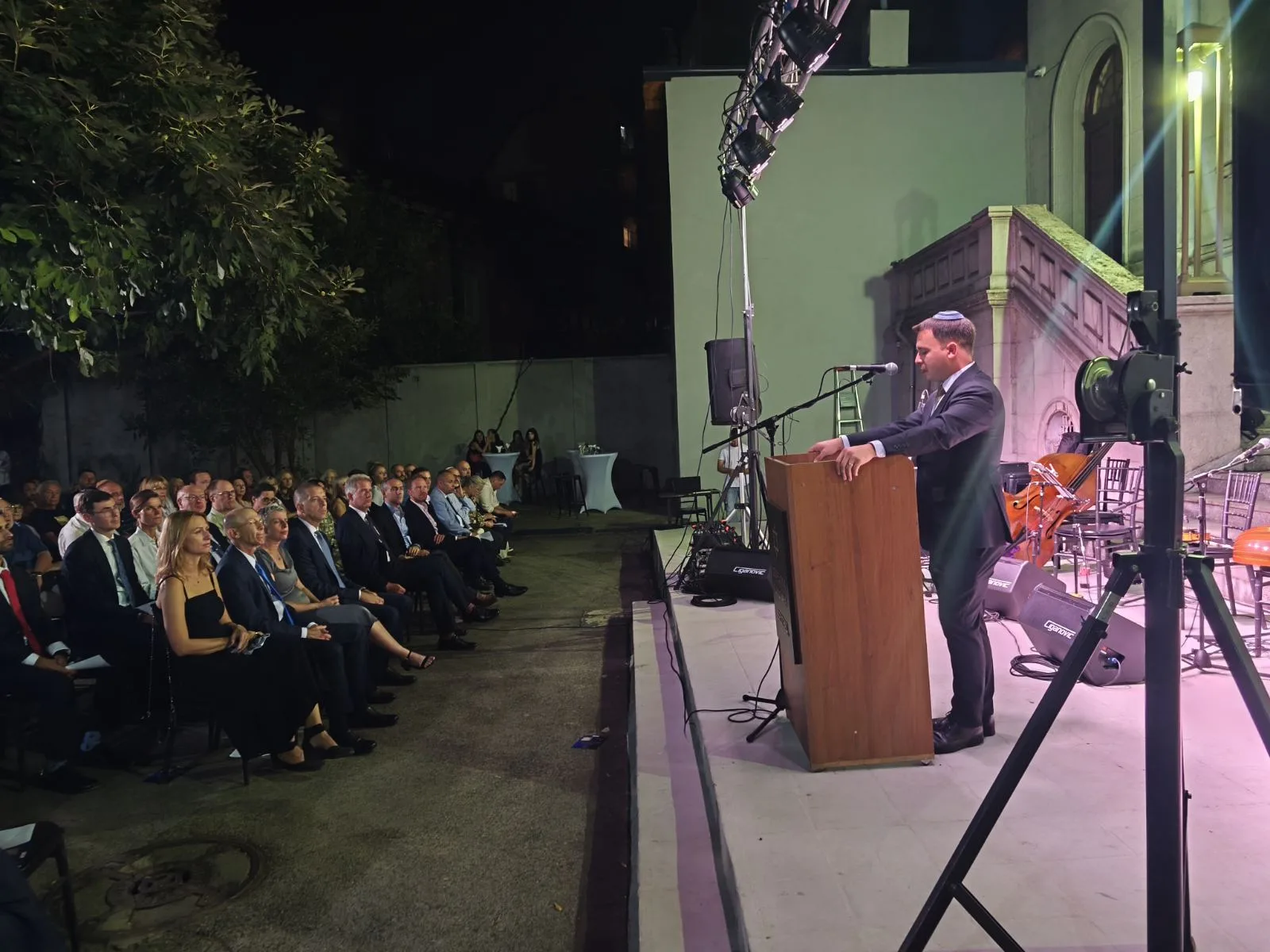


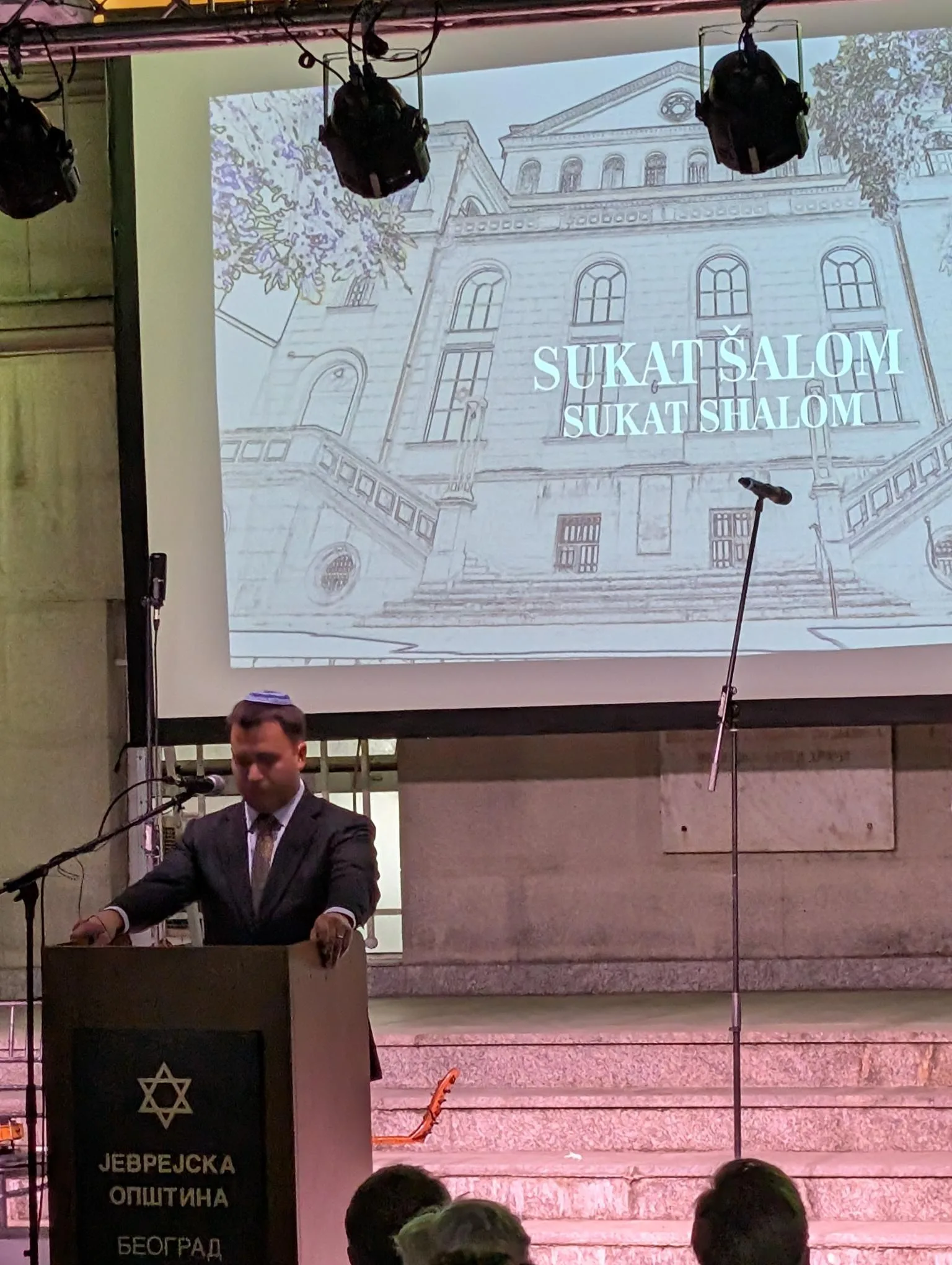
Last night, organized by the Jewish Community of Belgrade, the centenary of the Belgrade synagogue Sukat Shalom was ceremoniously celebrated in its courtyard. The event gathered a large number of members of the Jewish community, as well as representatives of the diplomatic corps, who honored one of the most significant religious and cultural sites of the Jewish community in the region with their presence. The Sukat Shalom synagogue, built a century ago, has been and remains the center of life for Belgrade's Jews, a witness to historical ups and tragedies, but also a symbol of the resilience of a community that, despite everything, has survived and preserved its identity.
The cornerstone of the synagogue was laid on June 15, 1924, in the presence of the royal envoy and other officials of the then Kingdom, while the charter placed in the foundation of the building was endorsed by King Alexander and Queen Maria Karađorđević with their signatures. The building was designed by architect František Urban, with the participation of Milan Šlang, and was completed on November 1, 1925, with the ceremonial consecration following in the summer of 1926. This is the sixth synagogue that the Jewish community has built in Belgrade during its centuries-long history, originally intended for the Ashkenazi rite. The synagogue, whose name Sukat Shalom translates to Booth of Peace, is today the only active synagogue in Belgrade and Serbia.
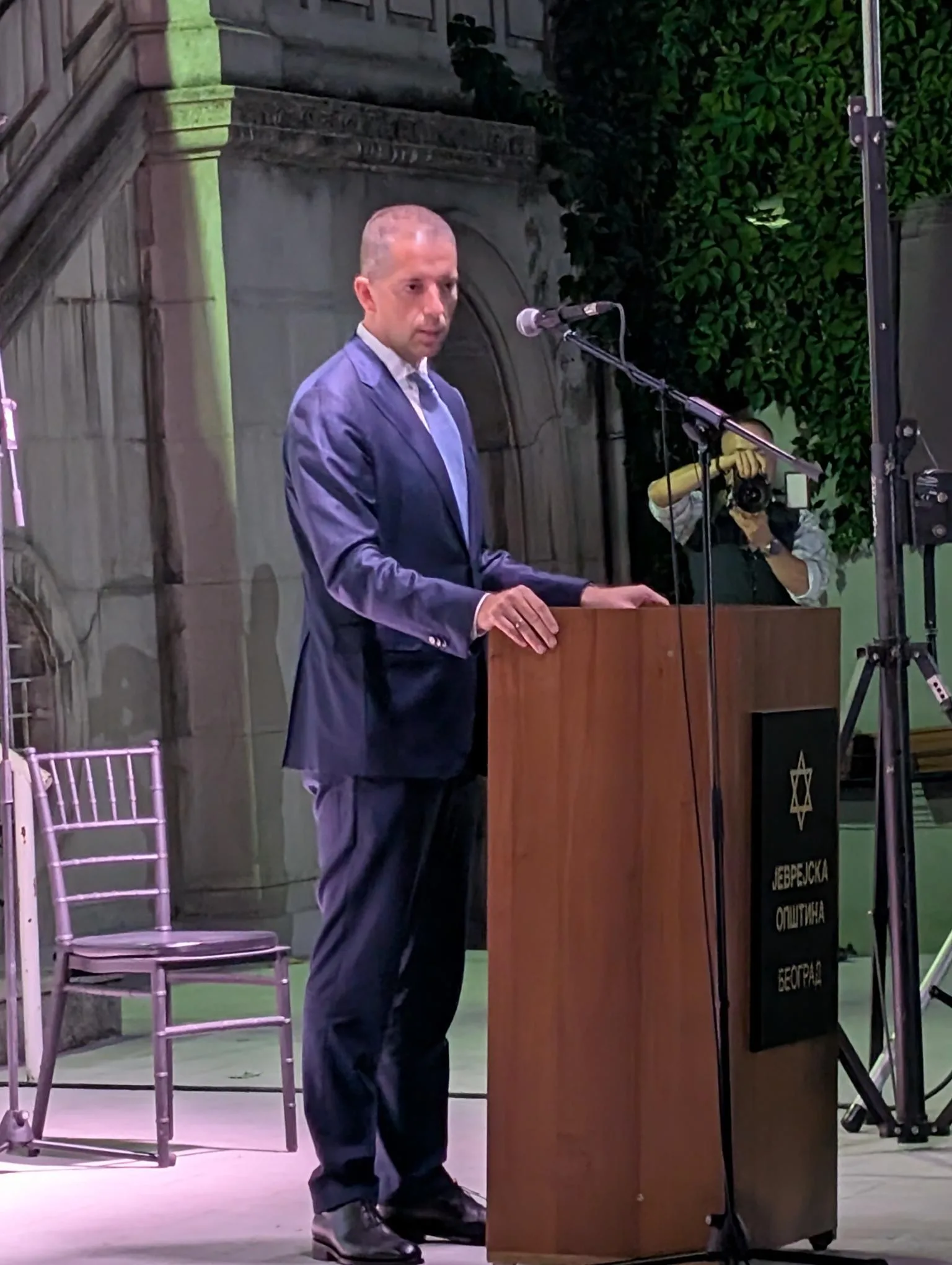
The gathering was opened by the president of the Jewish Community of Belgrade, Aron Fuks, who addressed the attendees with a speech reminding them of the significance that the synagogue had and still has for Belgrade's Jews. Fuks emphasized that the commemoration of this jubilee is not only a remembrance of the past but also a confirmation that tradition and faith continue to live in the heart of the city, being passed down from generation to generation. Following Fuks's speech, the Minister of Foreign Affairs of the Republic of Serbia, Marko Đurić, addressed the audience, highlighting that Serbia is proud of its Jewish community, which has contributed to this country and our social community in many areas throughout the centuries, even in the most difficult times.
The program was carefully designed to guide visitors through the entire century of the synagogue's existence. For this occasion, a short documentary film about the history of the Belgrade synagogue was prepared, which, through archival footage and photographs, brought the audience closer to its inception, the role it played during the turbulent periods of the twentieth century, as well as its place in the contemporary life of the Jewish community. After the film screening, the musical "Joseph and His Brothers" was performed, a work considered the oldest Jewish musical in the world. Written in Ladino, the language of Sephardic Jews, the musical reminded the audience of the rich Sephardic and Ottoman musical heritage that has been part of Jewish life in these areas for centuries.